Do you ever feel like you’re repeating yourself all day long?
You give an instruction, wait… and nothing happens.
You say it again.
Still nothing.
For many parents, especially homeschooling parents, this can feel frustrating and exhausting. The good news is that listening is not a personality trait. It’s a skill, and like any skill, it can be taught, practiced, and strengthened over time.
What Is Active Listening?
Active listening means more than simply hearing words. It involves:
- paying attention
- understanding what was said
- and responding appropriately
For children, this takes practice. Active listening requires focus, self-control, language processing, and emotional regulation, all things that are still developing.
Sometimes this is also referred to as whole body listening, where children learn to use their eyes, ears, body, and brain together.
Why Active Listening Matters at Home
Strong listening skills make daily life smoother and learning more enjoyable.
When children develop active listening skills, you’ll often notice:
- fewer repeated instructions
- better understanding of lessons
- improved conversations
- stronger confidence when speaking
- greater independence during schoolwork
Common Reasons Children Struggle With Listening
Before assuming a child is being defiant, it helps to look at why listening might be difficult.
Some common reasons include:
- too many distractions (screens, toys, noise)
- instructions that are too long or complex
- emotional needs (tired, hungry, overwhelmed)
- not fully understanding what’s being asked
If this sounds familiar, you may want to read our earlier blog:
Why Your Child Isn’t Listening (and What You Can Do About It)
Understanding the cause makes it much easier to respond calmly and effectively.
Simple Ways to Teach Active Listening at Home
1. Get attention before speaking
2. Keep instructions short and clear
3. Ask your child to repeat back
This helps confirm understanding and builds accountability.
“Can you tell me what you’re going to do first?”
4. Reduce background noise
5. Pause between steps
Give your child time to process what you’ve said before adding more information.
Teaching Active Listening Through Everyday Activities
Active listening doesn’t have to feel like “practice.”
You can build it naturally through:
- Read-alouds: ask simple questions about what was heard
- Building activities: give step-by-step Lego or block instructions
- Cooking together: follow spoken directions
- Nature walks: listen for sounds nearby and far away
Games are especially effective. You’ll find great ideas in:
Modelling Active Listening as a Parent
Children learn listening by watching how we listen.
Try to:
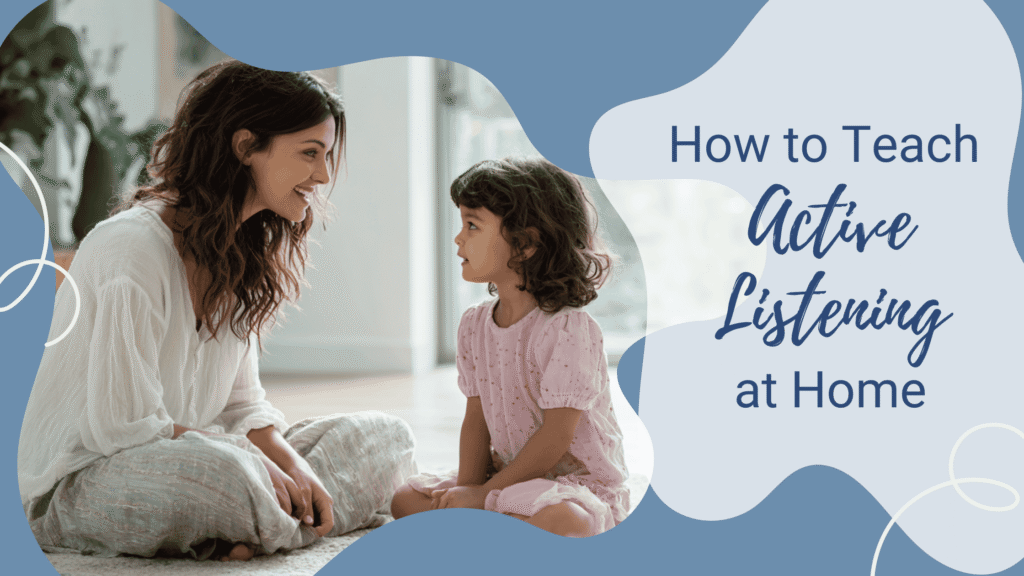
- pause and give full attention when your child speaks
- avoid interrupting
- acknowledge what they say before responding
The Takeaway for Parents
Active listening is not about obedience or perfection. It’s about helping children learn how to focus, understand, and respond with confidence.
Small, consistent habits, used daily, build strong listening skills over time. Be patient with the process and celebrate progress, even when it’s gradual.
Ready for More Support?
Want more simple, parent-friendly ways to support strong communication skills?
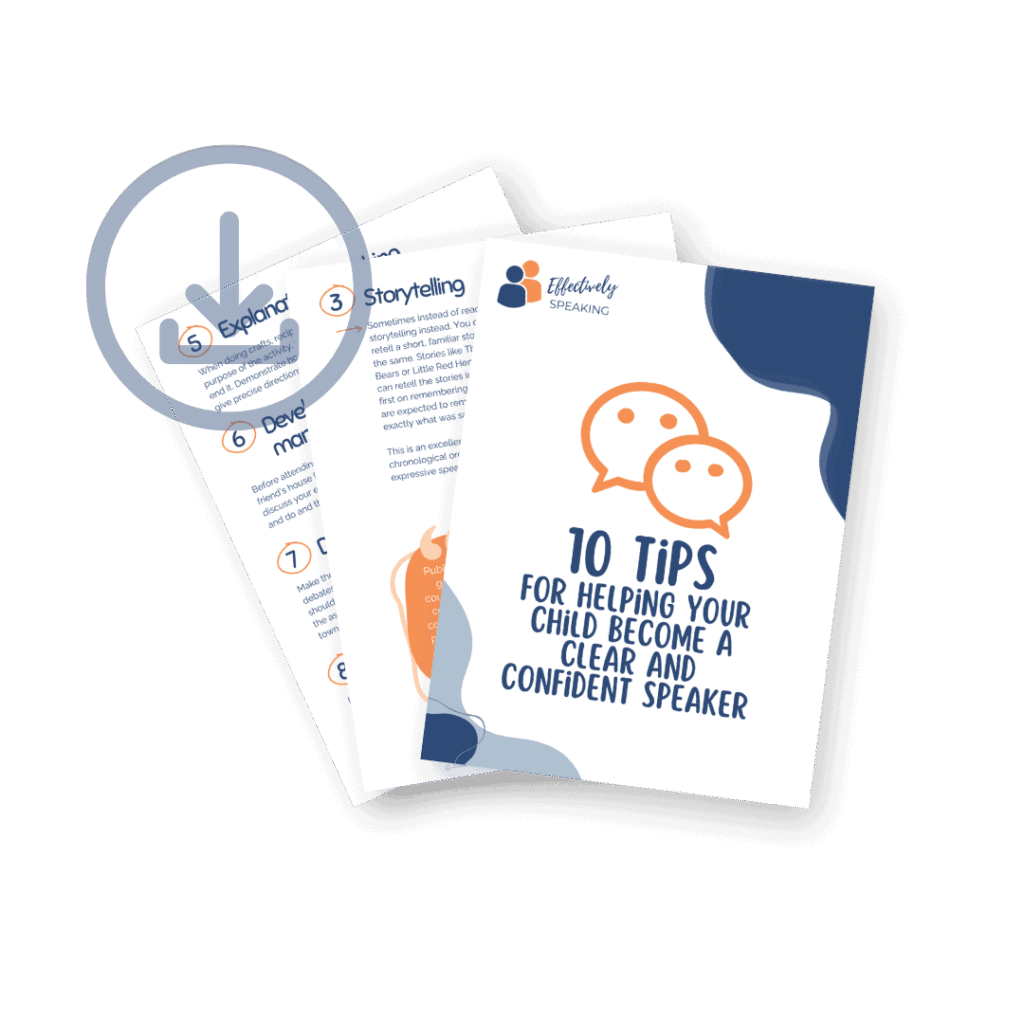
Download our free guide: 10 Tips to Help Your Child Become a Confident Speaker.
(It’s filled with everyday strategies you can start using right away.)
Frequently Asked Questions About Active Listening
What is active listening for children?
Active listening means a child is paying attention, understanding what is being said, and responding appropriately. It involves focus, comprehension, and engagement, not just hearing words.
At what age can children learn active listening?
Children begin developing listening skills in early childhood, but active listening improves gradually over time. Even preschoolers can practice simple listening habits with clear expectations and support.
How do I teach active listening without yelling?
Start by gaining your child’s attention before speaking, keeping instructions short, and checking understanding by asking them to repeat back what they heard. Calm, consistent strategies work better than raising your voice.
Why does my child listen sometimes but not others?
Listening can vary depending on distractions, energy levels, emotions, and the environment. A child may listen well in calm moments but struggle when tired, hungry, or overwhelmed.
Are listening problems a behaviour issue or a skill issue?
In most cases, listening challenges are a skill issue, not a behaviour problem. Skills like focus, processing language, and self-regulation take time to develop and improve with practice.
What activities help build active listening skills at home?
Everyday activities like read-alouds, building with instructions, cooking together, and listening games (such as Simon Says or I Spy) are excellent ways to practice active listening in a low-pressure way.