Listening Skills: Part 2
Are you worried when your child doesn’t respond when you speak, that they aren’t really listening?
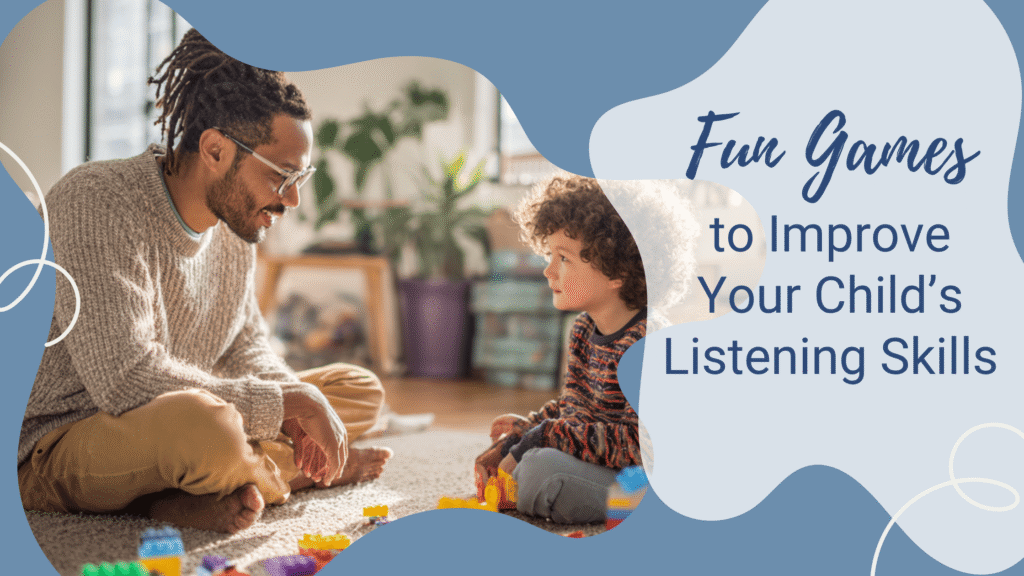
In our previous blog, we explored some of the reasons why children may ignore questions or instructions. This time, let’s look at entertaining, hands-on activities you can use to strengthen your child’s listening skills while having fun together.
Classic Listening Games
- Simon Says: Children only follow directions if the command begins with “Simon Says.”
- What Time Is It, Mister Wolf?: One player (the Wolf) calls out times like “3 o’clock,” and the child takes that many steps forward until the Wolf turns around and chases them back “home.”
- I Spy: The listener must focus carefully on the clues to identify the correct object.
- Hot and Cold: A hidden object is found by listening to the words “hot” and “cold” as clues for proximity.
Listening Activities at Home
- Listen and Build: Give your child step-by-step Lego instructions: “Build a tower with 10 bricks, but no two bricks next to each other can be the same colour.”
- Sound Bag (or Box): Hide sound-making items (keys, rattle, toy, etc.) in a bag. Can your child identify each sound without seeing the item?
- Odd One Out: Read a list of four items aloud (e.g., apple, peach, chair, banana). Can your child identify which doesn’t belong?
- Back-to-Back Drawing: One person describes a picture while the other draws it without seeing it.
- Story Listening: Read aloud and ask comprehension questions afterward. Try changing a detail mid-story. Did your child catch the “mistake”?
- Sound Hunt: On a walk, pause and listen: the wind in the trees, a woodpecker, a honking car, or distant music. Challenge your child to identify sounds near, far, and even from another room.
Teaching Active Listening (Whole Body Listening)
- Look at the speaker.
- Listen with your ears.
- Lips closed.
- Lap, hands resting quietly.
- Legs still.
The Takeaway for Parents
Games and playful activities make listening practice fun, but real progress comes from consistency. Model active listening yourself: make eye contact, pause to truly hear your child, and praise them when they listen well.
If you haven’t already, check out our earlier blog on why children don’t listen for practical strategies to reduce frustration and improve everyday communication. Together, these approaches will help your child strengthen their attentiveness while giving you more patience and creative tools as a parent.
Want even more strategies?
Download our free guide, 10 Tips to Help Your Child Become a Confident Speaker, and start building strong communication skills at home.