Public speaking skills are one of the most valuable tools a child can develop… even if they never step onto a stage.
Clear communication helps children express their ideas, build confidence, and connect with others. These are skills they will use every single day, at home, in school, and eventually in their careers.
If you’re wondering where to start, the good news is this:
You don’t need a formal class to begin.
There are simple, effective ways to build speaking skills right at home.
(And if you want to understand the bigger picture, you can read more about why public speaking is important for kids and how it impacts confidence and communication long-term.)
A Few Key Things to Know
- Public speaking helps kids build confidence, clarity, and communication skills
- You don’t need formal training to get started. Simple at-home activities work
- Younger children should focus on confidence and using their voice
- Older children can develop structure, storytelling, and presentation skills
- Consistent, low-pressure practice leads to the biggest improvements
- Structured programs can help reinforce and accelerate learning
Simple Public Speaking Activities by Age
Ages 3–5: Building Confidence and Voice
- Reciting short nursery rhymes, fingerplays, or songs
- Talking about a favorite toy, pet, or family member
- Standing in one spot and using a “big voice”
Ages 5–7: Learning to Express Ideas
- Short, improvised talks (2–5 sentences) about a favorite topic
- Sharing a picture (animal, object, place) and describing it
- Reciting or reading short poems
- Reading aloud from simple books or stories
- Creating short “mini speeches” using prompts
- Using a few keywords instead of reading word-for-word
Ages 8–12: Structuring Thoughts and Speaking Clearly
- Longer improvised speeches
- Prepared talks using simple outlines
- Topic-based presentations (like volcanoes, animals, or hobbies)
- What is it?
- What are the different types?
- Why is it important?
- Storytelling (retelling or adapting familiar stories)
- Book reports
- Reading or performing poems (especially humorous ones)
- Sharing Bible verses or meaningful passages
If you want to go deeper into this skill, this is where teaching kids to explain clearly becomes especially important.

Teaching Kids to Explain Clearly
Ages 13–18: Developing Confidence and Real-World Skills
Teenagers can take their communication skills even further by applying them to real-life situations.
Some great options include:
-
Informational or instructional speeches
(how to play a game, complete a task, or follow a recipe) - “YouTube-style” presentations or interviews
- Creating and presenting news-style reports
- Persuasive speaking for causes or fundraisers
- Teaching or tutoring others
At this stage, the focus shifts toward:
Clarity, confidence, and connection with the audience
You Don’t Have to Do It Alone
Most of these activities require very little preparation.
And the ones that do? They’re worth it.
Because every time your child practices speaking, they are:
- Strengthening communication skills
- Learning to organize their thoughts
- Building confidence
- Becoming more comfortable expressing themselves
A Simple Approach That Works
If you’d like more structure and guidance, there are ways to support your child without adding pressure.
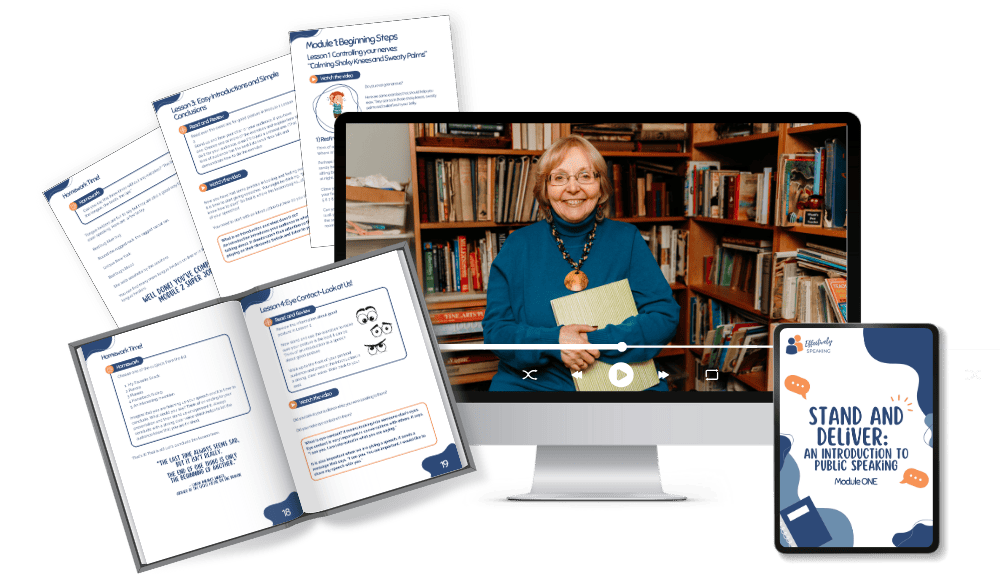
The Stand and Deliver online public speaking course is designed for children ages 7–12 and walks them through the fundamentals step by step.
Through 13 lessons, they learn how to:
- Organize their ideas
- Speak clearly and confidently
- Present in front of a real or pretend audience
It’s a simple, supportive way to help them build skills they’ll carry for life.
Where to Start (and What Matters Most)
Public speaking doesn’t have to feel intimidating or formal.
In fact, the best place to start is right at home…
with simple, everyday opportunities to speak, share, and be heard.
Start small. Keep it fun. Stay consistent.
You might be surprised how quickly confidence begins to grow.
FAQ: Public Speaking Activities for Kids
Common questions about public speaking for kids (and simple answers to help you get started).
What are simple public speaking activities for kids?
Simple public speaking activities for kids include talking about a favorite toy, reciting short poems, reading aloud, storytelling, and explaining how something works. These activities help children practice speaking clearly and build confidence in a low-pressure environment.
At what age should kids start practicing public speaking?
Children can start developing public speaking skills as early as age 3. At this stage, simple activities like speaking in front of family members, singing songs, or sharing short thoughts help build confidence and comfort using their voice.
How can I help my child improve their speaking skills at home?
You can help your child improve speaking skills by encouraging regular, low-pressure practice. Ask them to share stories, explain ideas, or talk about their interests. Focus on consistency rather than perfection, and provide positive feedback to build confidence.
Do kids need a public speaking course to learn these skills?
No, kids do not need a formal course to begin learning public speaking. Many foundational skills can be developed at home through everyday activities. However, a structured course can provide guidance, practice opportunities, and help reinforce key skills.
What are the benefits of public speaking for children?
Public speaking helps children develop confidence, improve communication skills, organize their thoughts, and express ideas clearly. These skills support success in school, relationships, and future careers.
How do you teach kids to speak clearly and confidently?
Teaching kids to speak clearly and confidently involves giving them opportunities to practice, encouraging them to use their own words, and helping them organize their thoughts. Using prompts, storytelling, and short presentations can make learning feel natural and engaging.
What are good presentation ideas for homeschool students?
Good presentation ideas for homeschool students include book reports, storytelling, explaining how something works, presenting on a topic of interest, or sharing news-style updates. These activities help build structure, clarity, and confidence in speaking.
How often should kids practice public speaking?
Kids benefit most from frequent, short practice sessions rather than occasional long ones. Even a few minutes of speaking practice a few times a week can lead to noticeable improvements in confidence and communication skills.