“He never listens!”
“She just ignores all my instructions!”
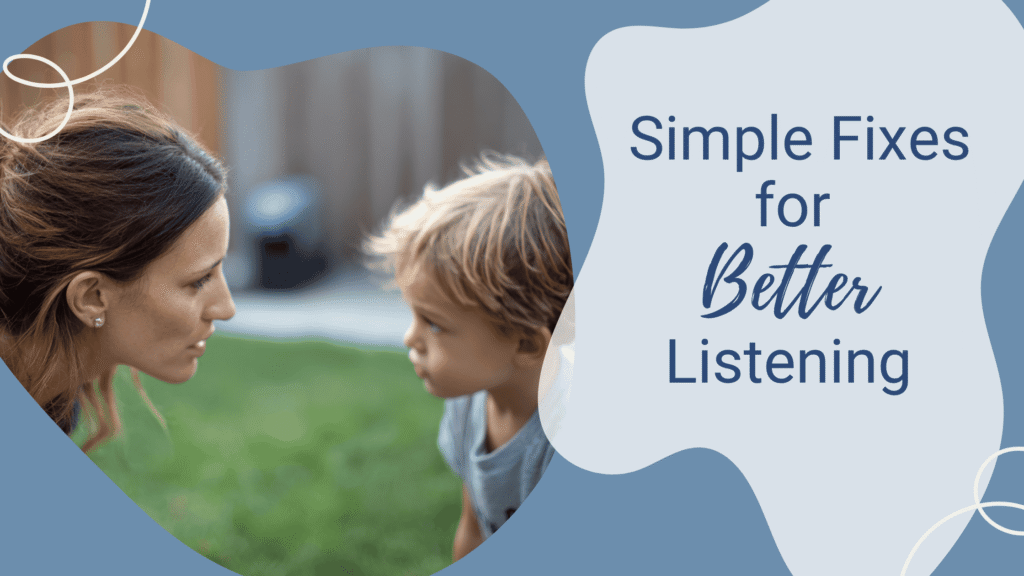
Do you ever find yourself saying something like this? Does it seem like your child can’t hear you, or that they’re deliberately ignoring you? You’ve had their hearing checked, and there doesn’t appear to be a medical issue, yet… There is a problem. So what can be done to improve your child’s listening skills?
The first step is understanding why the listening problem is happening. Once you know the cause, it’s much easier to choose a response that works, without resorting to yelling.
Possible Reasons Kids Don’t Listen
- They truly didn’t hear or understand you.
- They’re distracted by screens, toys, crafts, or a project, and can’t focus on anything else.
- They’re hungry, tired, sad, or overly excited.
- They feel disconnected from what’s going on around them.
- They’re not interested in what you’re asking.
- They’re testing boundaries and want more autonomy.
Sometimes, not listening is simply a way of asserting control: “I don’t want to respond, and you can’t make me.” Children want more say in what’s happening, and repeated requests, or waiting until you yell, become part of the routine
What Parents Can Try
1. Simplify your requests.
2. Get their full attention.
3. Meet their needs first.
4. Use the “if/then” approach.
- “When you’ve made your bed and put away your toys, we’ll go to the park.”
-
“After 15 minutes of reading, you can play with Lego until dinner.”
Over time, this becomes a natural routine.
5. Make it playful.
- “Can you clean up the craft supplies before I count to 10?”
- “Can you finish before Benji (the dog) comes in from the rain?”
6. Try silly consequences.
- “If you don’t set the table, I’ll give you a giant bear hug and sloppy kiss!”
- “If you ignore me, I’ll use your baby nickname in front of your friends.”
7. Model good listening.
Children learn from what they see. Show them attentive listening when they talk, and point out when they do the same:
“We got to Jake’s party on time because you listened and followed instructions. That was fantastic, thank you!”
Encouragement for You
Want more ideas right now?
Download our free guide: 10 Tips to Help Your Child Become a Confident Speaker and start building better communication habits today.