Learning to communicate clearly is one of the greatest gifts we can give our children.
When many people hear the words public speaking, they picture standing on a stage in front of a large audience. But for children ages 5 to 7, public speaking looks much different. It begins with everyday conversations, telling stories, sharing ideas, reading aloud, and having the confidence to express themselves.
These early years are an ideal time to build the communication skills that will support children throughout their lives. Whether they’re answering questions in a homeschool lesson, introducing themselves to new friends, participating in community activities, or eventually delivering presentations, confident communication starts with small, everyday experiences.
The wonderful news is that you don’t need a formal speech curriculum or hours of extra planning. Many of the activities that build strong speakers can be woven naturally into your daily routines through games, family conversations, storytelling, and imaginative play.
In this article, you’ll discover ten simple, engaging public speaking activities designed specifically for children ages 5 to 7. Each one helps develop confidence, listening skills, clear speech, and expressive communication while keeping learning enjoyable.
Quick Summary
- Why public speaking for young children is about building communication skills, not delivering formal speeches.
- Ten fun, age-appropriate activities that encourage confident speaking.
- Simple ways to strengthen listening, storytelling, expressive reading, and conversation skills.
- Easy ideas that fit naturally into homeschooling and everyday family life.
- Tips for helping even shy children become more comfortable expressing themselves.
Why Public Speaking Matters for Children Ages 5–7
Between the ages of five and seven, children are developing many of the foundational skills they’ll use for the rest of their lives. They are learning to organize their thoughts, build vocabulary, ask questions, explain ideas, and listen carefully to others.
Public speaking at this age isn’t about giving polished presentations. It’s about helping children become confident communicators who can express themselves clearly and respectfully.
As children practise speaking in a safe, encouraging environment, they begin to develop skills such as:
- Holding conversations and listening attentively.
- Reading aloud with confidence and expression.
- Telling stories in a logical, engaging way.
- Sharing opinions and ideas clearly.
- Using appropriate manners and social communication.
- Speaking with a clear voice, good eye contact, and growing confidence.
These may seem like small milestones, but together they create the foundation for future public speaking success.
The best part is that learning these skills doesn’t have to feel like schoolwork. Children learn best when they’re having fun, which is why the following activities are designed to feel more like play than practice.
10 Fun Public Speaking Activities for Children Ages 5–7
At this age, the goal isn’t to create polished public speakers. It’s to help children become comfortable expressing themselves, listening to others, and sharing their ideas with confidence.
The activities below are designed to be short, engaging, and easy to incorporate into your day. Whether you’re homeschooling, looking for after-school enrichment, or simply wanting to encourage stronger communication skills at home, these activities can help lay the foundation for a lifetime of confident speaking.
Remember, there are no perfect speeches here. Celebrate effort, encourage participation, and most importantly, keep it fun!
1. Play "Short Chats"
- My favourite toy
- My pet
- My favourite season
- What I like to do for fun
- My family
- My favourite book
Try This!
Communication Skills You're Building
- Speaking with confidence
- Organizing thoughts
- Clear communication
- Vocabulary development
Looking for even more public speaking activities? Watch for our upcoming free downloadable guide with 10 detailed activities, conversation starters, and confidence-building tips for children ages 5–7.
2. Read Aloud with Expression
Reading aloud is an excellent way to help children become confident speakers. As they read stories, poems, or picture books, they learn to use their voice to communicate meaning and emotion.
Encourage your child to think about how different characters might sound. Should they speak quietly, excitedly, or with a silly voice? Changing tone, pace, and volume helps make reading more engaging while building expressive speaking skills.
Whether your child is reading independently or simply retelling a favourite story from the pictures, every opportunity to speak aloud builds confidence.
Communication Skills You're Building
- Expressive speaking
- Reading fluency
- Voice projection
- Speaking confidence
3. Memorize and Perform Silly Poems
Short, humorous poems are a fun way to introduce children to speaking from memory. Once they know the words, they can focus on using facial expressions, gestures, and vocal expression to bring the poem to life.
Choose poems that make your child laugh and encourage them to perform for family members or friends. The goal isn’t perfection. It’s helping children discover that sharing their voice can be enjoyable.
Try This!
Communication Skills You're Building
- Speaking from memory
- Clear articulation
- Voice expression
- Confidence performing
4. Tell Family Stories
Storytelling helps children learn how to organize their thoughts while sharing experiences in a way others can follow.
Invite your child to tell a story about something that happened during their day, a favourite family memory, or even an imaginary adventure. Encourage them to include a beginning, middle, and end, while adding interesting details along the way.
As they become more comfortable, ask questions like, “What happened next?” or “How did that make you feel?” These gentle prompts help children expand their ideas and become more confident communicators.
Communication Skills You're Building
- Organizing ideas
- Descriptive language
- Speaking confidence
- Active listening
5. Play Show and Tell at Home
Show and Tell isn’t just for the classroom. It’s a wonderful way to help children practise speaking in front of others in a familiar, supportive environment.
Ask your child to choose a favourite toy, book, collection, or special keepsake and share why it’s important to them. Encourage them to describe it, explain where it came from, and answer a few questions afterwards.
This simple activity builds confidence while helping children learn to explain their thoughts clearly.
Try This!
Communication Skills You're Building
- Speaking clearly
- Answering questions
- Organizing thoughts
- Building confidence
6. Practise Everyday Conversations
Some of the best public speaking practice happens during everyday conversations.
Whether you’re ordering at a restaurant, saying hello to a neighbour, asking a librarian for help, or thanking a cashier, these small interactions help children build confidence speaking with others.
Give your child opportunities to speak for themselves whenever possible. It may take a little longer, but these real-life experiences help them develop independence and strong communication skills.
Communication Skills You're Building
- Conversational confidence
- Clear speech
- Social communication
- Good manners
7. Ask and Answer Questions
Learning to ask thoughtful questions and respond with complete answers is an important communication skill that often gets overlooked.
Choose a fun topic and take turns asking one another questions. Encourage your child to answer using complete sentences and explain their thinking rather than giving one-word responses.
This activity helps children become more comfortable thinking on their feet while building confidence expressing their ideas.
Try This!
Fill a jar with fun questions like “If you could have any superpower, what would it be?” or “What’s the best adventure you’ve ever had?” Pull out a different question each day during lunch or dinner.
Communication Skills You're Building
- Listening carefully
- Answering confidently
- Critical thinking
- Conversation skills
8. Put on a Puppet Show
Puppets are a wonderful way to encourage even shy children to speak with confidence. Sometimes it’s easier to speak when you’re pretending to be someone else!
Invite your child to create a simple story using puppets, stuffed animals, or even homemade paper characters. They can invent funny voices, solve problems, or act out a favourite story.
This imaginative play encourages creativity while helping children become more comfortable speaking in front of an audience.
Communication Skills You're Building
- Creative storytelling
- Voice expression
- Imagination
- Speaking confidence
9. Give Simple Directions
Following and giving directions helps children learn to communicate clearly and logically.
Ask your child to explain how to build with blocks, make a peanut butter sandwich, brush their teeth, or complete another familiar task. Encourage them to think through each step and explain it in order.
This activity strengthens sequencing skills while teaching children how to organize and clearly communicate their thoughts.
Try This!
Communication Skills You're Building
- Sequencing ideas
- Giving clear instructions
- Logical thinking
- Speaking clearly
10. Become a TV Host or Tour Guide
Children love pretending, and imaginative role play is a fantastic way to build public speaking skills.
Invite your child to become a television host, weather reporter, zoo guide, museum curator, or tour guide for the day. They can introduce their favourite stuffed animals, give a tour of the backyard, report on the weather outside, or “interview” family members.
Because they’re playing a character, many children feel less self-conscious and are more willing to speak confidently and creatively. There are no scripts to memorize or right answers to give, just an opportunity to have fun while using their imagination.
Try This!
Communication Skills You're Building
- Creative thinking
- Speaking with confidence
- Voice projection
- Audience awareness
Every Conversation Builds Confidence
Public speaking doesn’t begin on a stage. It begins at the dinner table, during story time, while playing make-believe, and in the everyday conversations children have with the people who care about them most.
By creating regular opportunities for your child to share their ideas, tell stories, ask questions, and speak with confidence, you’re helping them develop skills that will benefit them for years to come. These moments may seem small today, but they lay the foundation for confident communication in school, relationships, future careers, and beyond.
Remember, the goal isn’t to raise a perfect public speaker overnight. It’s to encourage a child who feels comfortable expressing themselves, knows their voice matters, and has the confidence to use it.
Whether you try one activity or all ten, the most important thing is to keep the experience positive, encouraging, and fun.
Looking for more ways to help your child develop strong communication skills? Explore our growing collection of resources, including topics on oral communication and public speaking.
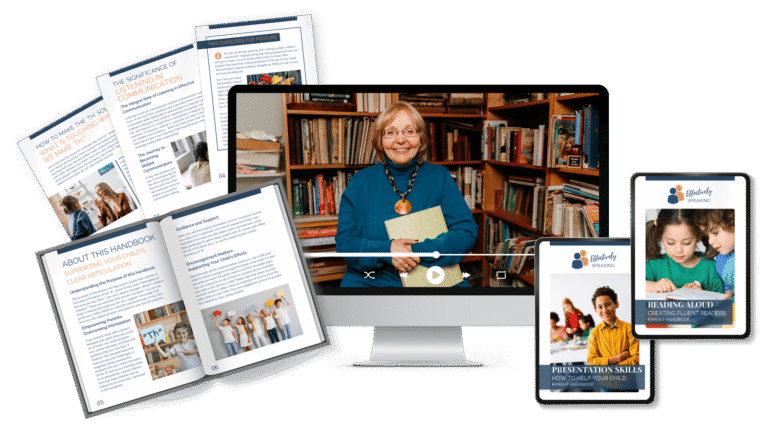
Looking for activities for older children?
As your child grows, their communication skills will continue to develop. Explore our article, Public Speaking Activities for Children Ages 8-12, for age-appropriate ideas that help older children build confidence, strengthen presentation skills, and become more effective communicators.
FAQ:
At what age should children start learning public speaking?
Children can begin developing public speaking and communication skills as early as age five. At this stage, the focus isn’t on formal speeches but on building confidence through conversations, storytelling, reading aloud, and imaginative play.
My child is shy. Should I encourage public speaking activities?
Absolutely. The key is to keep activities relaxed and enjoyable without forcing participation. Celebrate effort rather than perfection, and allow your child to build confidence at their own pace.
How often should we practise public speaking activities?
Even five to ten minutes a few times a week can make a meaningful difference. Many communication-building opportunities can be naturally included in everyday routines like reading together, family meals, or car rides.
Do these activities work for homeschool families?
Yes! These activities fit naturally into homeschool learning and can easily be incorporated into language arts, reading, or daily family life. They’re also a wonderful way to help children build confidence in a supportive environment.
Where can I find more public speaking activities for young children?
This article is a great place to start, and we’re working on even more resources to support families. Be sure to check back for additional activities, guides, and learning tools designed to help children become confident communicators.
Looking for even more activities?
We’re creating a free downloadable guide packed with additional public speaking activities, conversation starters, and confidence-building ideas for children ages 5–7. Stay tuned by checking back on the Effectively Speaking blog or joining our newsletter so you don’t miss it.
Join our newsletter to be the first to know!