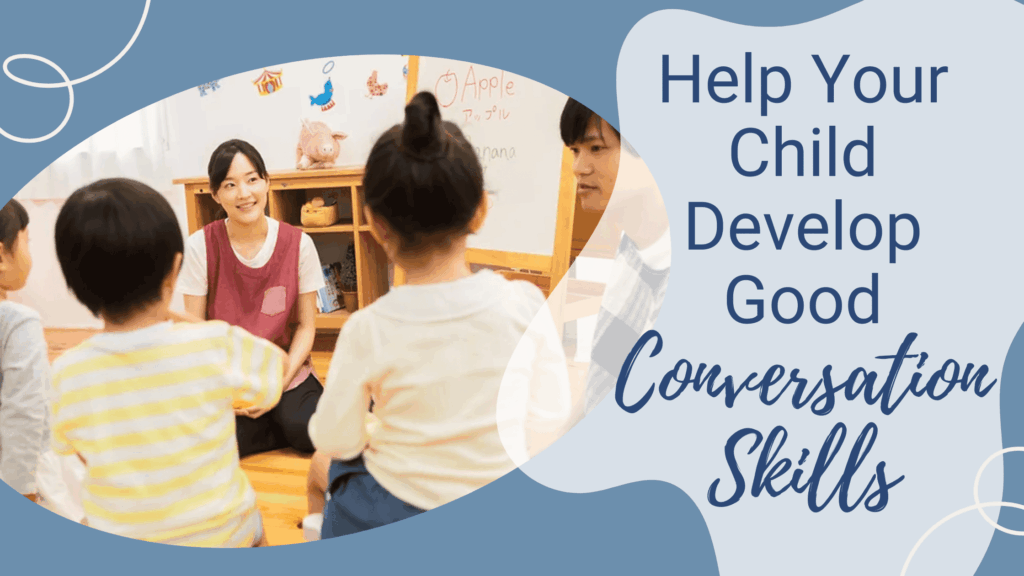
We are often chatting, discussing, explaining and persuading others. It should be easy but often it isn’t, especially for those who are shy or awkward. Sometimes conversations can become difficult if a speaker doesn’t know the common social rules such as how to take turns or how to change a topic. Children can learn these skills and can gain confidence by practicing good conversation techniques through role-play and games.
Most conversations start with a greeting of some sort. Discuss the possibilities for what your child could say, such as Hi!, Hello, Good Morning, Good Afternoon or Good Evening or any other greeting commonly used in your community or circle of acquaintances. Just for fun you could try some out that you don’t normally use and see if your child approves such as Yo, Bro!, What’s up doc? A good day to you Madam. Encourage your child to try out a few different greetings and decide which one they are most comfortable with.
Eye contact and a smile really communicate friendliness, a willingness to chat and an interest in the other person. Some children, however, have a hard time with this. Practicing usually helps!
Here’s an opportunity to role play. Take turns walking into the room and greeting others with a Hi, Hello or whatever greeting has been chosen. Make eye contact and smile. For a bit of silliness, you could take on different characters and call each other by different names such as:
Hi Crocodile Jim!
Hello Terry the Tuna!
Good Morning, your majesty.
Try not to laugh! Don’t worry if you do. It’s meant to be fun!
A conversation doesn’t stop there, however. Next, we usually say something like, How are you? Or How are you doing? Most people answer with Fine, thank you or something similar, even if they are not! It is a bit strange but it gets the conversation started!
So far we now have:
- A greeting like Hello!
- Eye contact and a smile
- How are you? Or something similar
- A question
- Adding to something the other speaker has said
- Or introducing a new topic
Here is another opportunity to practice and role-play. Review all the steps with your child including the greeting they will use, a reminder about eye contact and a smile, and asking a how are you type of question. Keep it simple.
Once they can remember these basic steps try encouraging them to do the next steps of asking questions, adding responses and/or introducing new topics. They will likely need help with this part until they can remember the choices but after a while, they should be able to handle a simple conversation and maintain it for at least a few minutes. That is a good start to becoming a confident conversationalist!